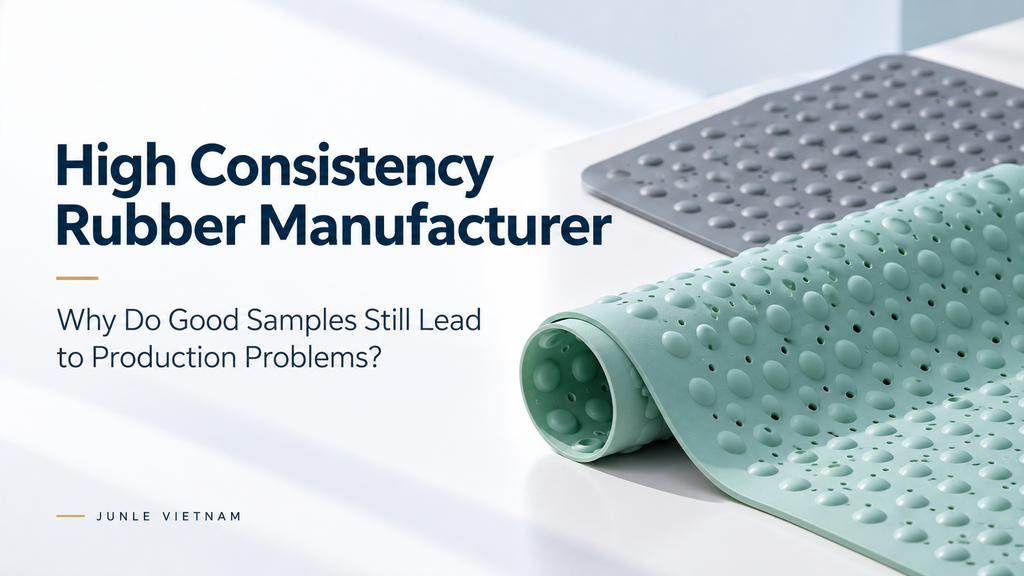
Your silicone sample looks perfect. The design is approved. Everything seems ready for production.So why do bubbles, weak spots, or inconsistent curing suddenly appear when manufacturing begins?
For brands and businesses developing custom silicone products, these problems aren’t just about appearance. They can mean rejected parts, production delays, and unexpected costs.
This is where choosing the right high consistency rubber manufacturer really matters — not simply for making parts, but for identifying potential risks before they become expensive problems.
1. Why Do HCR Silicone Parts Develop Bubbles or Curing Defects?
A small bubble might not look serious. But what if the problem is hidden inside the product?
In solid silicone manufacturing, bubbles, surface blistering, brittle areas, and incomplete curing can result from several factors, including moisture exposure, trapped air, improper material preparation, or unstable curing conditions.
Some defects are easy to see. Others, such as under-cured sections, may only become noticeable when the product is stretched, compressed, or used.For hcr silicone products, this means appearance alone isn’t always enough to judge quality.
What buyers should know: Before approving a sample, ask how the manufacturer evaluates curing consistency and checks for defects that may affect the product’s intended use.
Catching these issues during sampling is usually far less disruptive than discovering them after production has started.
2. Can Material Storage and Mixing Affect the Final Product?
Sometimes, a quality problem starts long before the silicone enters the mold.From our practical manufacturing experience, material preparation deserves just as much attention as the molding process itself.
Take Vietnam’s humid environment, for example.
Improper material storage can increase the risk of moisture-related problems. Meanwhile, uneven mixing of rubber compounds and curing agents may contribute to inconsistent curing.In solid silicone production, these small details can make a noticeable difference to the finished product.
That’s why an experienced high consistency rubber manufacturer should pay attention to how materials are stored, prepared, and handled before production.
For buyers, the key question isn’t just what material is being used — it’s how consistently that material is managed.
3. Why Isn’t Increasing Mold Temperature Always the Best Solution?
When production needs to move faster, increasing mold temperature may seem like an easy solution.But faster curing doesn’t always mean better results.Excessive temperature can cause premature surface curing, while insufficient heat or curing time may leave thicker sections incompletely cured.
Blocked mold vents can also trap air, creating bubbles or localized defects.One detail we’ve learned to pay attention to is the difference between the machine’s displayed temperature and the actual mold temperature.A machine may show the expected setting while the mold itself has not reached a stable, uniform temperature.
For hcr silicone manufacturing, reliable results depend on balancing temperature, curing time, mold venting, and material conditions.The goal shouldn’t simply be a faster production cycle. It should be a repeatable process that delivers consistent parts.
4. What Should Buyers Check Before Approving Silicone Samples?
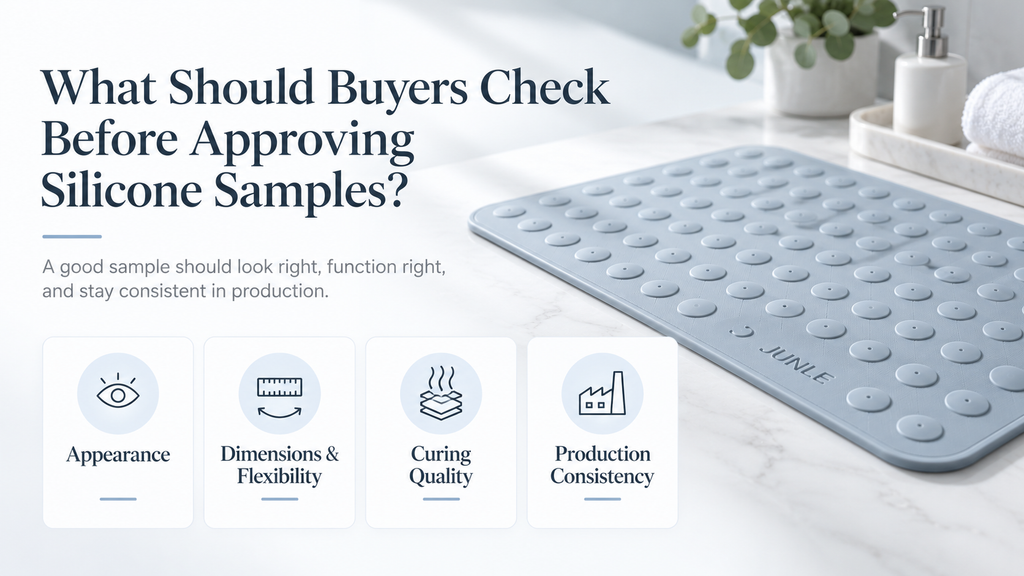
A beautiful sample is a good start. But can the manufacturer reproduce that quality in the next 500 or 5,000 pieces?That’s the question worth asking before mass production.
When reviewing custom silicone samples, focus on these key points:
Appearance: Are there bubbles, cracks, surface defects, or uneven details?
Dimensions and flexibility: Does the part match the drawing and meet its intended functional requirements?
Curing quality: Has the manufacturer checked for incomplete or inconsistent curing?
Production consistency: Are the inspection criteria clear enough to apply to future batches?
For example, when developing custom silicone pet lick mats or feeding accessories, details such as surface texture, molded patterns, and flexibility can be important to the finished product.
A small design or molding issue during sampling may become a much larger problem when repeated across an entire order.
Our suggestion: Agree on practical quality requirements before production begins, not after the first batch arrives.
5. HCR or LSR: Could the Wrong Molding Process Increase Your Costs?
Not every silicone product should be manufactured the same way.
HCR compression molding can be a practical choice for many solid silicone components. Liquid Silicone Rubber (LSR) injection molding may be better suited to certain complex shapes, precision requirements, or production volumes.
But choosing between them isn’t simply about which process sounds more advanced.The right decision depends on your product design, material requirements, expected order quantity, and tooling budget.
When evaluating silicone injection molding companies, it’s worth asking whether they understand the differences between manufacturing processes — and whether they can explain which approach makes sense for your project.
For more details, explore our LSR vs HCR molding comparison.If you’re comparing potential suppliers, our guide on how to choose silicone injection molding companies may also help.
A suitable manufacturing process isn’t necessarily the most expensive one. It’s the one that can meet your requirements without unnecessary complexity or rework.
6. What Should You Expect from a High Consistency Rubber Manufacturer?
When developing a custom silicone product, you shouldn’t have to discover every manufacturing problem on your own.A capable manufacturing partner should be able to discuss potential risks early, explain practical options, and help you make informed decisions before committing to production.
At Junle Vietnam, we support custom silicone projects through mold development, material selection, silicone compression molding, and manufacturing support.
Drawing from our molding experience, we work with customers to review product structures, discuss production requirements, and identify factors that may affect finished-part quality.
Whether you’re developing silicone components, custom pet accessories, or other molded silicone products, the starting point is the same:
Understanding what your product needs before deciding how to manufacture it.
Have a drawing, sample, or a new silicone product idea?
Explore our silicone compression molding and customization services and tell us what you’re working on.
A good manufacturing partner doesn’t just make your product — they help you avoid problems before those problems become part of your order.