Have a product idea but only a reference image to get started? Finding a supplier who can turn that idea into a manufacturable product is often more challenging than expected.
Developing custom silicone products involves much more than choosing a shape or material. Product dimensions, structural details, flexibility, mold design, and sample verification all influence the final result.
For pet brands, retailers, and product development managers, choosing the right manufacturing partner early can help avoid unnecessary design changes, development delays, and production problems.
So, when sourcing custom silicone products, how can you tell whether a supplier has the capabilities to support your project from the initial idea to mass production?
Here are five important things to evaluate before making your decision.
1. Can the Supplier Turn Your Product Idea into a Clear Development Plan?
A reference image communicates the general appearance of a product, but it rarely provides all the information needed for manufacturing.
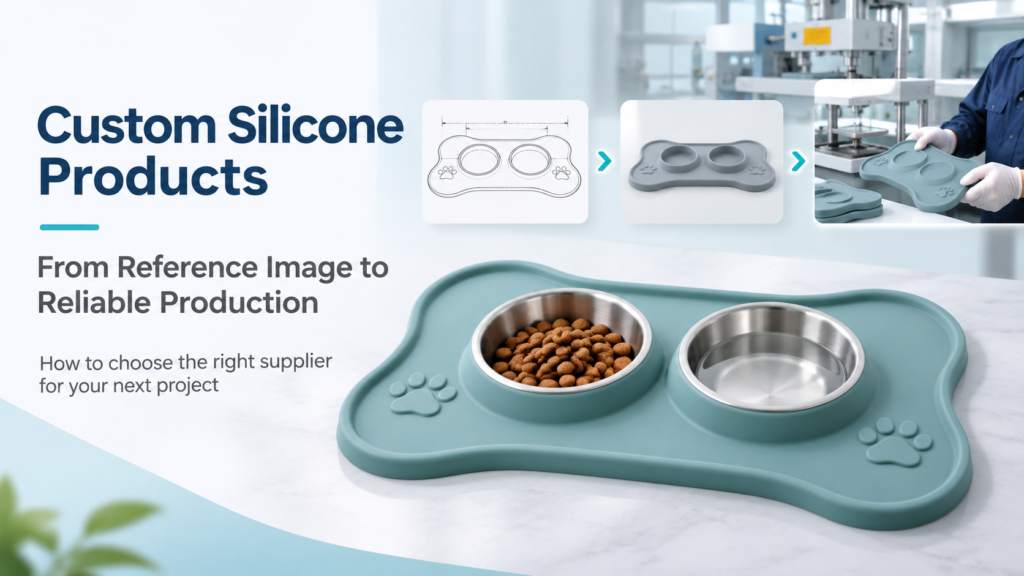
For example, when developing a silicone pet feeding mat, you may already know the desired shape, color, and general appearance. However, several important details still need to be clarified:
- What are the required overall dimensions?
- How thick should the product be?
- Does it need raised edges to contain food or water?
- What surface texture or functional details are required?
- How flexible should the finished product be?
A capable supplier should not simply accept the image and immediately provide a quotation.
Instead, they should understand the product’s intended use, ask relevant questions, and identify which details need further confirmation.
This initial discussion helps transform a product idea into a clearer development direction before any manufacturing decisions are made.
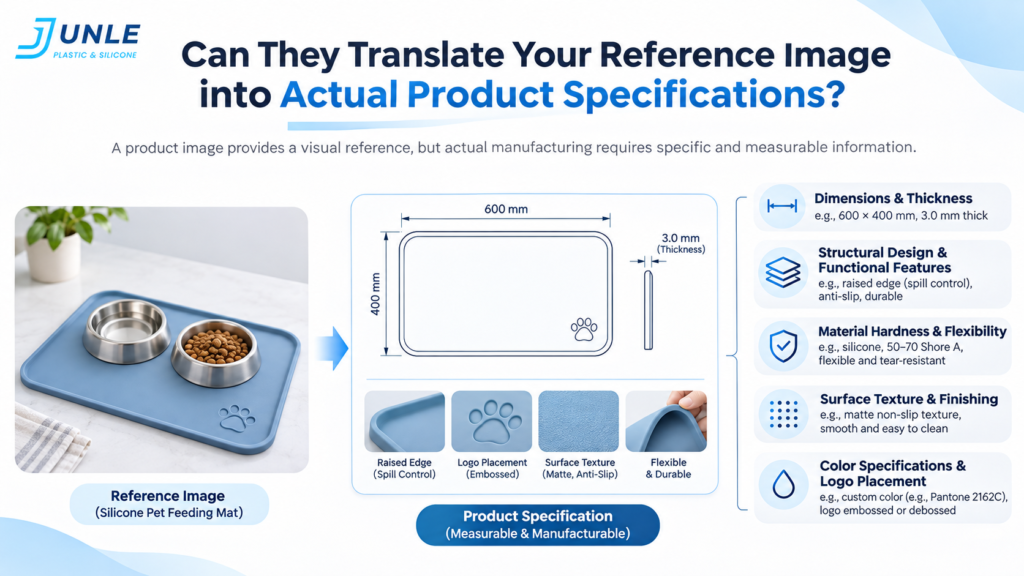
2. Can They Translate Your Reference Image into Actual Product Specifications?
This is one of the most important steps in developing custom silicone products.
A product image provides a visual reference, but actual manufacturing requires specific and measurable information.
Before moving forward, the supplier should help clarify:
- Product dimensions and thickness.
- Structural design and functional features.
- Material hardness and flexibility requirements.
- Surface texture and finishing details.
- Color specifications and logo placement.
If you do not have a complete technical drawing, a development-oriented silicone products manufacturer should be able to discuss the missing information and help establish clearer product specifications.
For example, two feeding mats may look almost identical in pictures but have different thicknesses, edge heights, and surface structures. These differences can affect their functionality and manufacturing requirements.
When evaluating suppliers for custom silicone products, ask whether their team can help review your design and confirm the necessary specifications before mold development.
A supplier’s ability to identify missing information is often a better indicator of development experience than a low initial quotation.
3. Can the Supplier Evaluate Design and Mold Feasibility?
Not every product design can be manufactured exactly as it appears in a reference image.
For example, a pet feeding mat with deep grooves, raised edges, or a specially textured surface may require additional consideration of its structure and mold design.
Before starting mold development, a qualified manufacturing partner should be able to discuss:
- Whether the proposed design is suitable for silicone production.
- Whether any structural adjustments are necessary.
- Whether an existing mold can be adapted or a new mold is required.
- Which design details should be confirmed before sampling.
For custom silicone products, these discussions are important because design decisions made too early without considering manufacturing feasibility may lead to unnecessary revisions later.
The goal is not to change your original product idea unnecessarily. It is to find a practical manufacturing solution that preserves the intended appearance and functionality.
This is where an experienced silicone products manufacturer can provide value beyond simply accepting an order.
4. Does the Supplier Have a Clear Sample Approval Process?
A sample is not just a preview of the finished product. It is an important opportunity to verify whether the design and specifications meet your expectations.
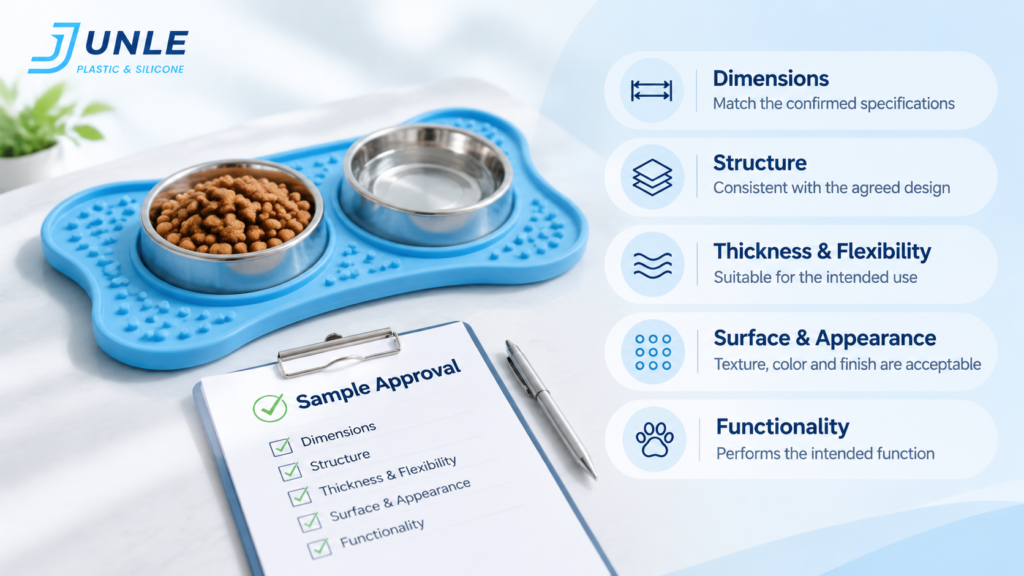
For custom silicone products, buyers should check several details before approving a sample:
- Are the dimensions consistent with the confirmed specifications?
- Does the product structure match the agreed design?
- Are the thickness and flexibility suitable for its intended use?
- Are the surface texture, color, and appearance acceptable?
- Does the product perform its intended function?
For example, a silicone pet feeding mat should be evaluated for its actual dimensions, bowl placement, edge design, and practical use.
Before mass production, the approved sample and its specifications should be clearly documented as the reference for subsequent manufacturing.
This step helps reduce misunderstandings between product development and mass production, particularly when a buyer is introducing a new product to the market.
5. Can the Supplier Support the Project from Development to Mass Production?
When comparing suppliers for custom silicone products, buyers often focus first on unit price and delivery time.
However, a competitive quotation does not necessarily mean the supplier is suitable for your project.
Before making a decision, evaluate whether the supplier can support the complete process:
- Understanding your initial product idea.
- Clarifying dimensions and technical specifications.
- Reviewing product design and mold feasibility.
- Coordinating sample development and approval.
- Preparing for consistent mass production.
For smaller pet brands, retailers, and growing businesses, having one manufacturing partner who can coordinate these stages can make product development easier to manage.
It also helps reduce communication gaps between design, sampling, and production.
Rather than choosing a supplier based on price alone, look for a partner who understands both your product requirements and the practical challenges of bringing a new product to market.
Finding the Right Partner for Custom Silicone Products
At Junle Vietnam, we understand that not every customer starts with a complete technical drawing. Sometimes, a reference image and an initial product idea are all that is available.
With our own manufacturing facility in Vietnam, we provide OEM/ODM cooperation, mold development, product customization, and mass production for silicone pet products.
Our team works with customers to clarify product requirements, discuss design details, coordinate sample development, and prepare products for manufacturing.
Whether you are developing a new feeding mat, slow feeder, pet bowl, or another silicone pet accessory, we can start by understanding your product idea and the specifications that need to be confirmed.
You don’t need to have every technical detail figured out before starting a discussion. What matters is having a manufacturing partner who knows which questions to ask and how to move your idea forward.
If you are looking for a partner for your next custom silicone products project, share your reference image and initial requirements with Junle Vietnam. We would be happy to discuss your product development needs and explore a suitable manufacturing solution.