The possibilities of rubber, plastic, and silicone molding unfold with extensive wideness, it will overwhelm all materials you are searching for. It can be anything from rubber O-rings, sealing strips, to tiny computer components in aerospace. Normally, we require these components to complete some missions and projects, or accomplish business goals. You can find that these molding products are precise to fit any need or application. Some types of molding are literally found everywhere, ranging from household items and appliances to industrial components and manufacturing lines. We can find molded products in our cars, homes, and daily products.
What is Molding?
Molding is a process to make materials of rubber, plastic, or silicone compound into different required forms. Sometimes, the molding can contain two or more different elements, because there are endless possibilities of material mixture.
Elastomer molding typically starts with uncured rubber materials, and applies heat in most vulcanization processes. We call these materials thermoset, rubber, and elastomer, which are synthesized in various processes and formula additives.
Silicone has an abundance of easily altered chemical structures. It can be modified and processed in different ways, including thermoplastics and metals in unison. Furthermore, silicone is especially appreciated for its water-repelling and heat-resistant properties, some patented formulas are specific for unique applications.
Types of Molding
We determine different molding technologies by the specifications of the part, components, and projects. The rubber, plastic and silicone molding are generally manufactured by these processes. There are several common molding techniques as follows.
Blow Molding
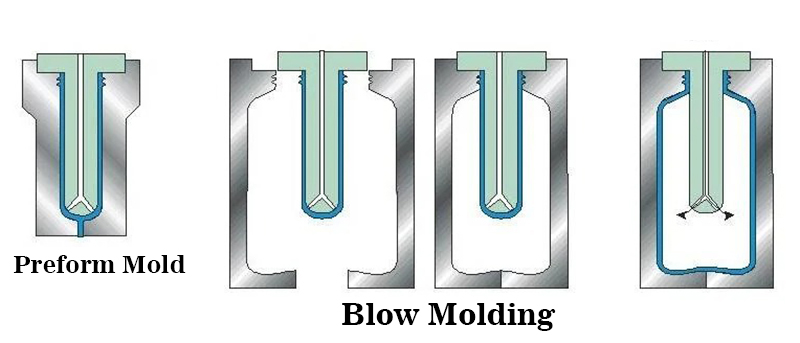
Blow molding is similar to glass-blowing. Firstly, the heated tube or other implement will be inserted into the materials. Then blow through to enlarge the rubber, plastic, or silicone to fit the molds. Finally, remove objects once they have cooled down. We normally apply this technique to produce high-volume hollow objects. It is suitable for hollowed shape requirements in projects.
Compression Molding
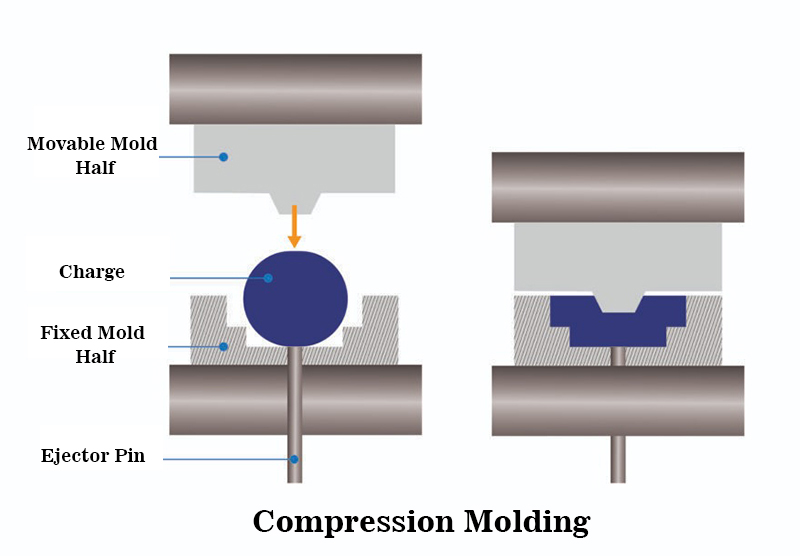
Compression molding uses high pressure to squeeze a preformed material piece into a mold between 2 or more plates. The preformed material pieces must be heavier than the molded parts, in order to expel all air from the mold under high pressure. Then we will cut away excess materials, and cure shaped products by heat or more pressure. This curing process is vulcanization. Normally, compression molding is suitable for large cross-section parts with low quantities.
Compression molding normally has a longer cure time than other techniques. However, it is ideal for materials with high density or high hardness level. The automotive industry always applies compression molding products, due to their superior strength.
Compression tooling makes low cost than other tooling, it is ideal for medium and large size parts without high volume quantities. It is able to process any rubber materials without any limitations of challenging.
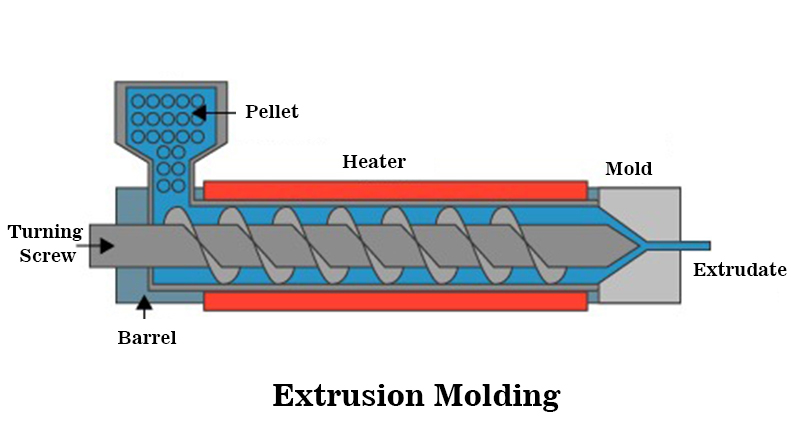
Extrusion Molding
Extrusion molding is typically used to produce long, hollow products such as pipes, straws, and tubes. Different from other methods, extrusion molding places materials through a die directly and determines the form. Then cool down the formed long tube, and cut it for different applications. Such as a drinking straw. It is the unique tube shape production method.
Hot Runner Injection Molding
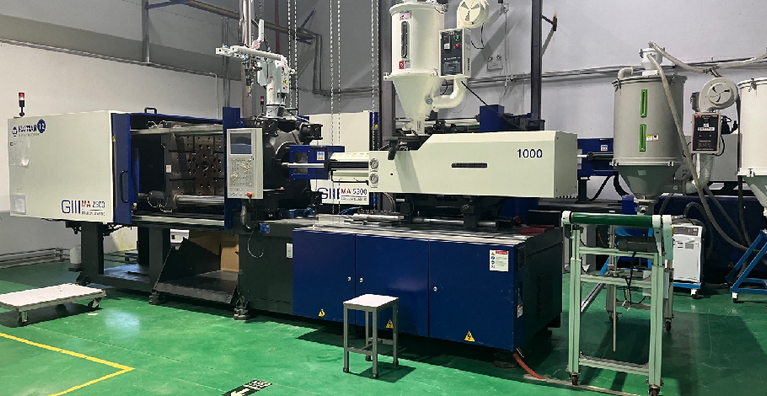
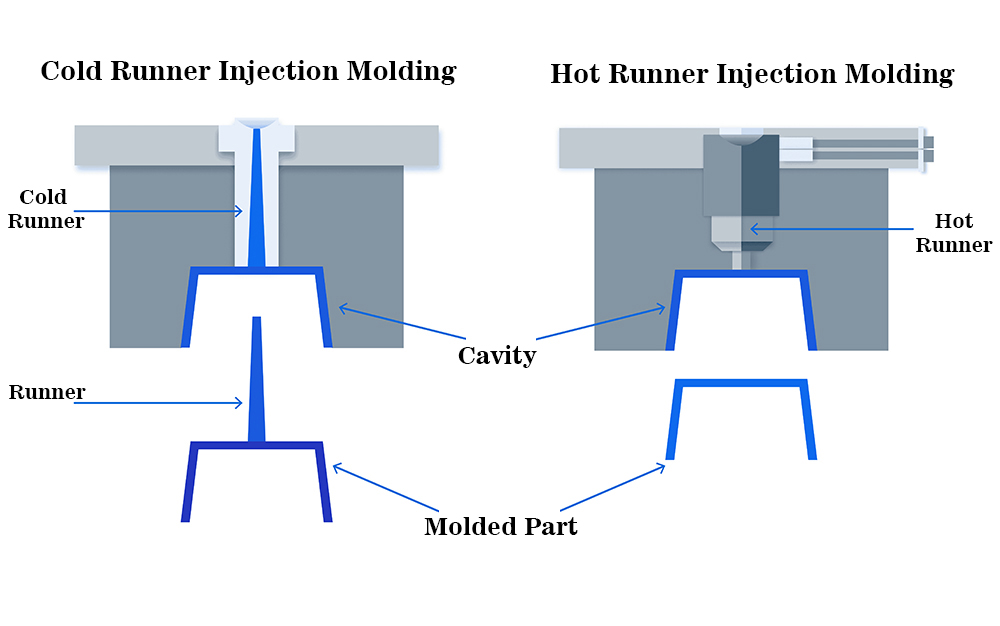
Hot runner injection molding applies screw nozzles to inject molten thermoplastics through the hot runner system. Molten materials will pack the mold cavities full via gate, runner, and sprue system. Then, cool and solidify the formed parts before ejection from the cavities.
Injection molding is the most efficient molding process, it is suitable for small to medium-sized items with high quantities. It is able to produce components with the requirement of high uniformity, complex inserts, and tight dimensional tolerance.
Injection molding is widely applied in the medical, electronic, and automotive industries. Its application has grown vastly and covers all industries over time. Hot runner injection molding eliminates pre-forming and human-operator handing process. Its unit cost is generally low in high volume.
Cold Runner Injection Molding (Thermoset)
Cold runner injection molding is specific to thermoset-like liquid silicone rubber. It applies a closed thermoset mold. Liquid silicone rubber is divided into two parts. The mixing-metering pump combines them together and delivers them to the injection device. Then, inject these mixtures into the mold chamber. After that, in a heated mold, the platinum catalyst in LSR materials will compel the rapid curing process.
Liquid Silicone Injection Molding is the best choice for the medical industry, the whole production process involves a closed system without human contact and contamination. It is most suitable for micro-components with different object sizes for accommodation. Otherwise, LSR injection molding is ideal for high-volume production, and it can also add color with pigment.
Rotational Molding
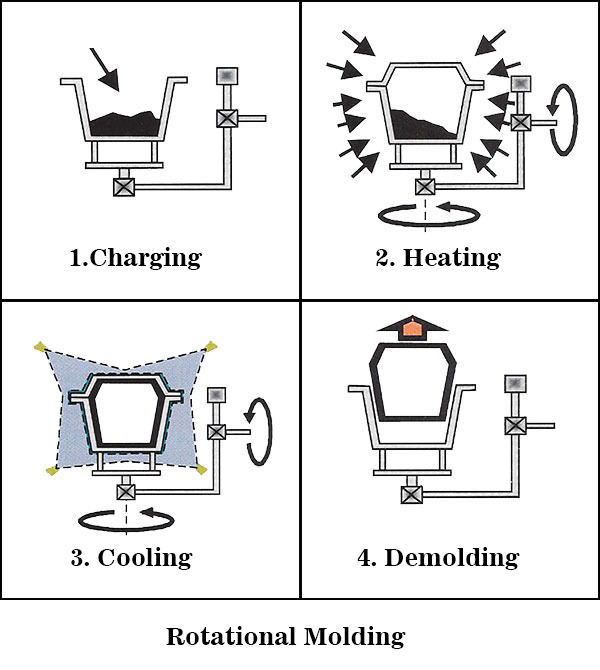
Rotational molding (Rotomolding) rotates the mold to coat materials inside, and creates the desired products. This process is relatively slow and only suited for large, hollow objects. Such as a liquid or gas tank. There is little material waste because of the even coating of the walls by centrifugal force in rotational motion. However, it is only economical for certain applications.
Transfer Molding
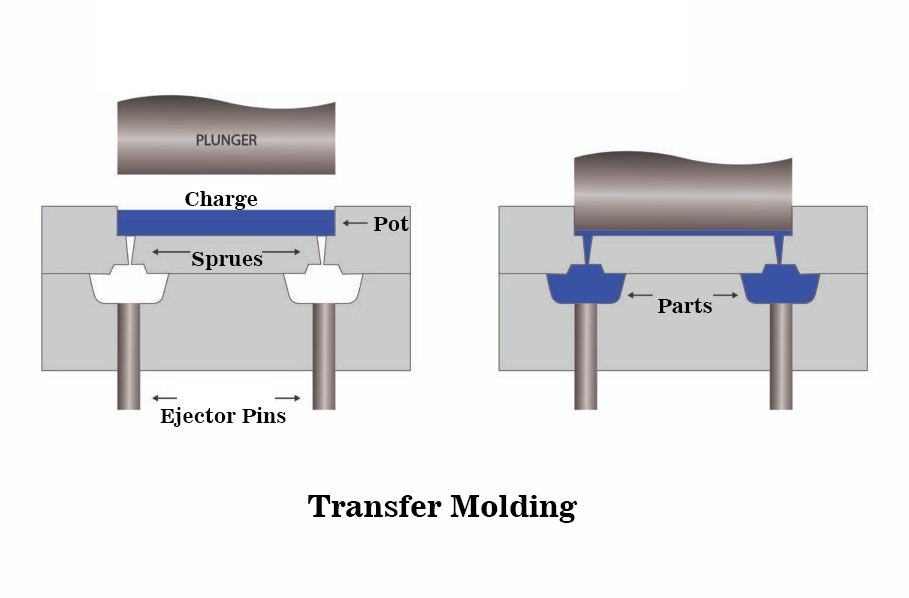
Transfer molding applies a piston or plunger to push rubber materials from containers into the mold through the gate, runner, and sprue system. Then, cured rubber materials are injected by heat and pressure in mold. Transfer molding has a lower unit cost than compression molding. Rubber materials are injected into closed mold cavities with exact quantities.
This technology still require litter pre-forming process, it has tighter dimensional control than compression molding, especially for micro-component production. In addition, we can also add different colors to the final products. All molding projects are different in size, complexity, quantity, purity, and other factors. The final products may have marks of indentation, lip, ridge, hole, grooves, notches, or other cavity kinds. All these molding technologies can manufacture components with various properties to satisfy customer specification demands.
Silicone Rubber Molding
Silicone rubber molding produces a multitude application for different industries. It is the cutting edge of molding technologies, it continues to improve as new developments of polymers and formulas.
Junle, as the silicone industry leader in Vietnam, focuses on extraordinary solutions for Liquid Silicone Rubber(LSR), including LSR injection molding, LSR over-molding, and LSR 2-shot molding. This expertise enables us to develop versatile components for various specifications.
LSR excels in many electrical applications due to its insulation and conductivity. Consider LSR fire resistance, it is good for construction and building applications. In addition, its water-repellent and resistance make it a popular choice for marine-oriented devices.
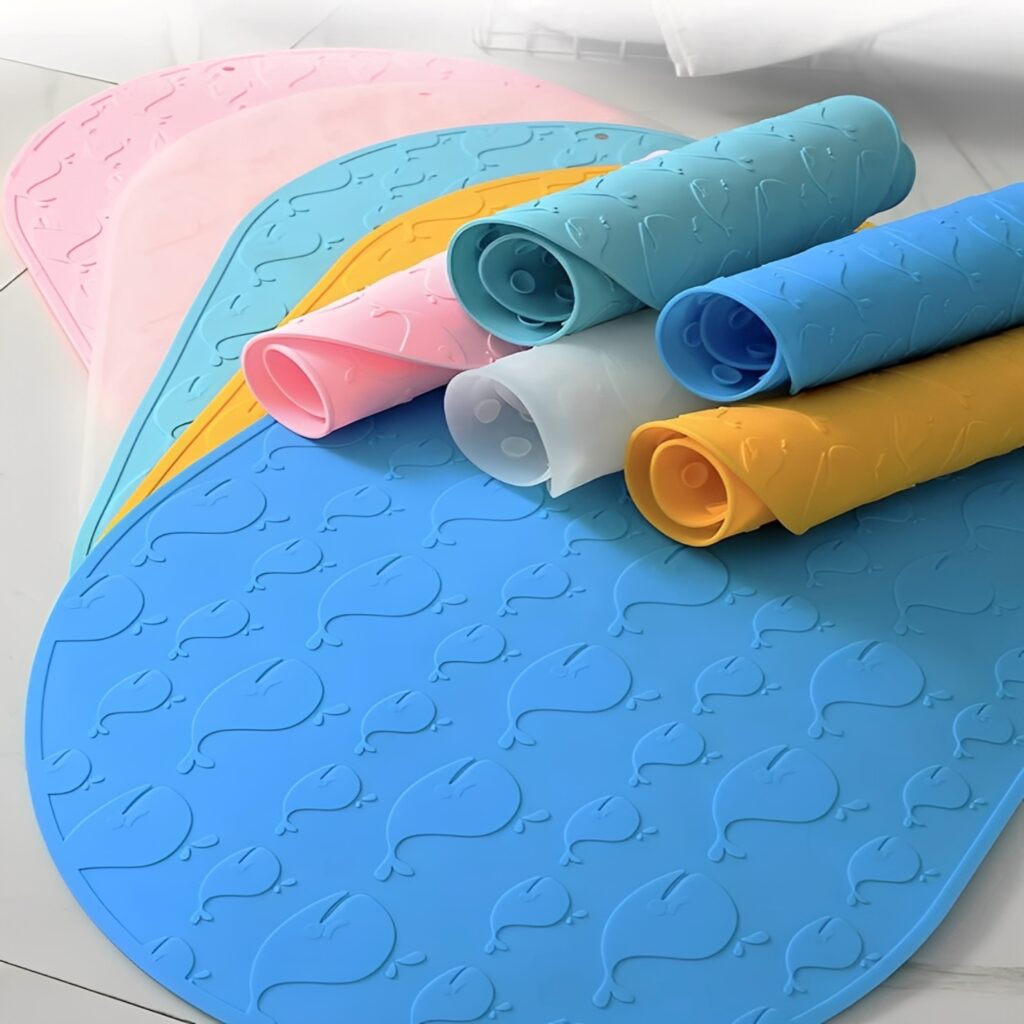
Professional Manufacturer to Refine Production
In conclusion, Junle manufacture custom designed LSR parts with high-quality. Our capability can satisfy different requirements in various industries. Since 2000, we have produced billions of components, and we have served clients from medical tools to specialty items. We invite everyone to understand the molding process, and provide guidance to no matter what they need for their specific projects.
In addition, you can also contact us for professional advice on your LSR projects.