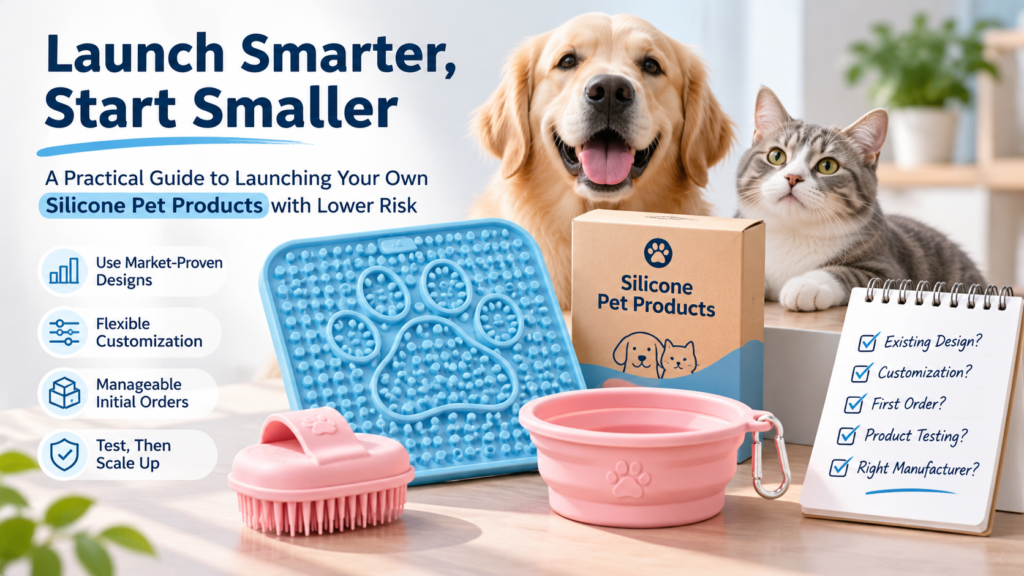
A new pet product doesn’t always need a new mold.
For small pet brands, retailers and online sellers in Vietnam and Southeast Asia, launching silicone pet products is not simply about finding an attractive design. The bigger challenge is deciding how much to invest before knowing how customers will respond.
A new mold, multiple colors and a large initial order can quickly increase the financial risk of a product launch.
Starting with an existing design and gradually developing your own product line may be a more practical approach.
1. Start with Market Demand, Not a New Mold
Before investing in a custom design, it is worth understanding what your customers actually need.
Take a silicone slow feeder mat as an example. Its appearance may attract attention online, but customers will also consider whether it is easy to clean, suitable for different types of pet food and convenient for everyday use.
For retailers and small pet brands, these practical details can be more important than developing a completely new shape.
Before selecting silicone pet products, consider:
- Your target customers and retail price range.
- The problems the product should solve.
- How the product differs from existing alternatives.
- Whether the design fits your current product collection.
A product with a clear purpose is often a better starting point than a completely new design without proven demand.
2. Choose the Right Level of Customization
Developing custom silicone pet products does not necessarily mean starting from zero.
Depending on your budget and product development goals, there are three common approaches:
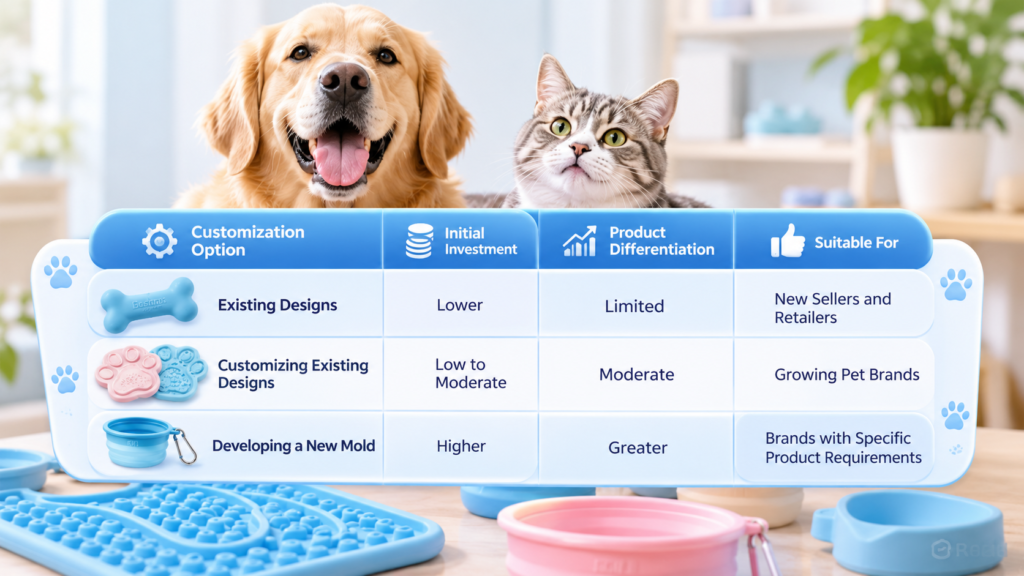
For example, a pet brand may start with an existing silicone slow feeder mat and customize its color, printed logo and packaging.
This allows the brand to establish its own product identity without immediately investing in a new mold.
Once market demand becomes clearer, further investment in exclusive shapes, textures or functions can be considered.
3. Make Existing Products More Competitive
Using an existing mold does not mean every brand needs to sell exactly the same product.
Small customization choices can help create a more recognizable product collection.
When developing custom silicone pet products, buyers can consider:
- Brand-specific colors and color combinations.
- Printed logos or other compatible branding methods.
- Silicone hardness options, where suitable for the existing design.
- Retail packaging and product bundles.
For example, combining a slow feeder mat, a collapsible travel bowl and a grooming brush in coordinated colors could create a more cohesive collection for a pet lifestyle brand.
The important thing is to confirm customization limitations with your silicone pet products manufacturer before finalizing the design.
Changes to product dimensions, molded logos or surface textures may require mold modification or new tooling.
4. Keep Your First Order Manageable
For many small pet businesses, the challenge is not simply the unit price but the amount of money tied up in the first order.
Ordering too many colors or product variations can increase inventory pressure, especially when customer preferences are still uncertain.
Instead of focusing only on the lowest unit price, buyers should also evaluate:
- Minimum order quantity per product and color.
- Additional customization and packaging costs.
- Initial inventory investment.
- Reorder quantities and replenishment lead times.
Starting with a limited number of silicone pet products and a manageable color range can help businesses collect customer feedback before expanding their inventory.
A reliable manufacturing partner should help buyers understand these trade-offs rather than simply encourage a larger order.
5. Test the Product Before Scaling Up
A product that looks good in a sample photo may not perform equally well in everyday use.
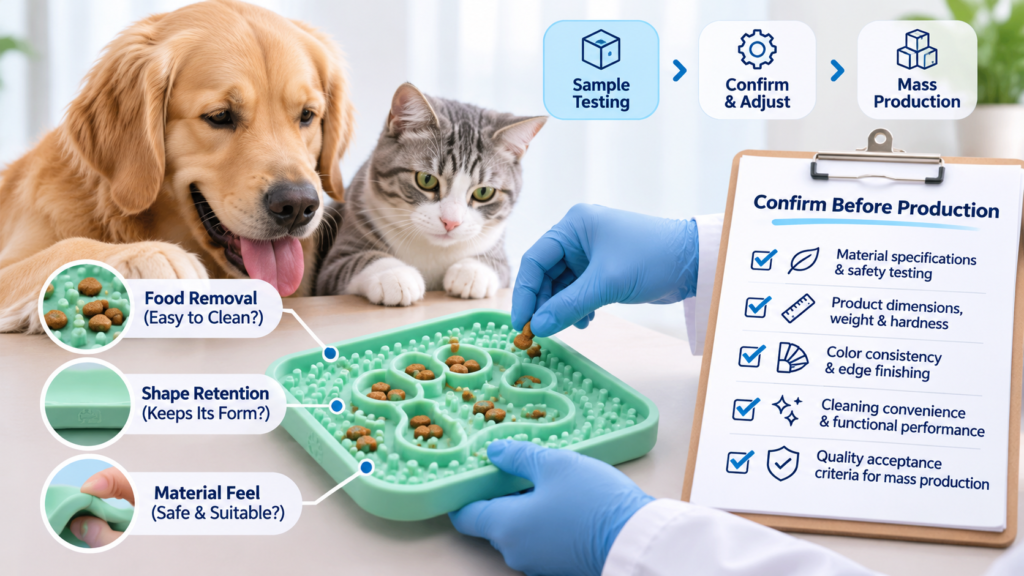
For a silicone slow feeder mat, buyers should check whether food can be removed easily from the textured areas, whether the mat maintains its shape and whether the material feels suitable for its intended application.
Before approving custom silicone pet products for production, it is also important to confirm:
- Material specifications and relevant safety testing.
- Product dimensions, weight and hardness.
- Color consistency and edge finishing.
- Cleaning convenience and functional performance.
- Quality acceptance criteria for mass production.
Working with a silicone pet products manufacturer that understands both product functionality and manufacturing limitations can help reduce unnecessary design changes and quality issues later.
6. Finding the Right Manufacturing Partner in Vietnam
For pet businesses in Vietnam and Southeast Asia, working with a local or regional manufacturing partner may offer advantages in communication, sample coordination and replenishment planning.
However, location alone should not determine your supplier choice.
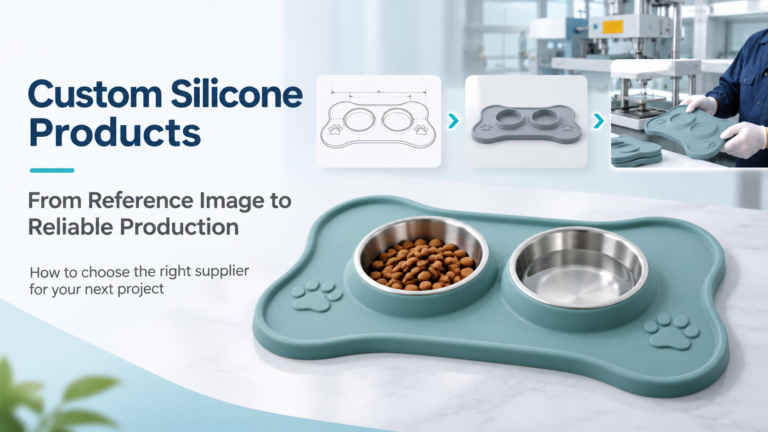
A suitable silicone pet products manufacturer should be able to explain what can be customized using existing molds, what requires new tooling and how different decisions affect your overall investment.
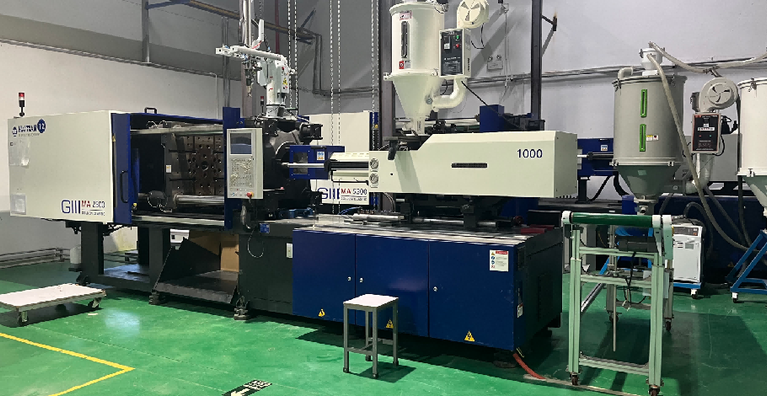
At Junle Vietnam, we work with pet brands, retailers and product developers through our own manufacturing facility in Vietnam, supporting existing product designs, customized production and in-house mold development.
Whether you are planning your first collection or developing a more distinctive product line, we can start by reviewing your target market, product requirements and estimated order quantities.
Explore our silicone pet products, or share your product ideas with us to discuss a suitable development and manufacturing approach.
Sometimes, the best way to launch a new product is not to start bigger, but to start with the right design and a manageable investment.